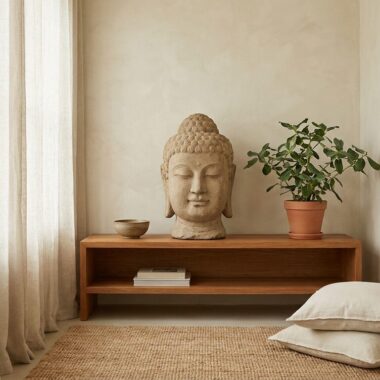
The best way to clean a brass sculpture is also the gentlest: dust it regularly with a soft, dry cloth or brush, and never use metal polish on a patina. Many decorative brass pieces are finished with a coloured patina, and polishes, acids and abrasive pads remove it for good. A thin coat of silicone-free wax every year or two is all the protection most indoor sculptures need.
First, know your finish
Before you clean anything, look closely at the surface. Brass sculptures usually come in one of two finishes:
- Bare or polished brass: a bright, golden metal surface. It darkens slowly over time as it reacts with air and humidity.
- Patinated brass: the surface has been deliberately coloured, for example the ginger and turquoise of our Gold Fish, the greenish-grey of Balon Anjing and Nandi, or the antiqued bronze-gold of Babi Hutan.
Many pieces combine both: a patinated body with polished highlights. Treat the whole sculpture as patinated, because a polish that brightens the highlights will also eat into the colour around them.

The weekly routine: dust, don’t scrub
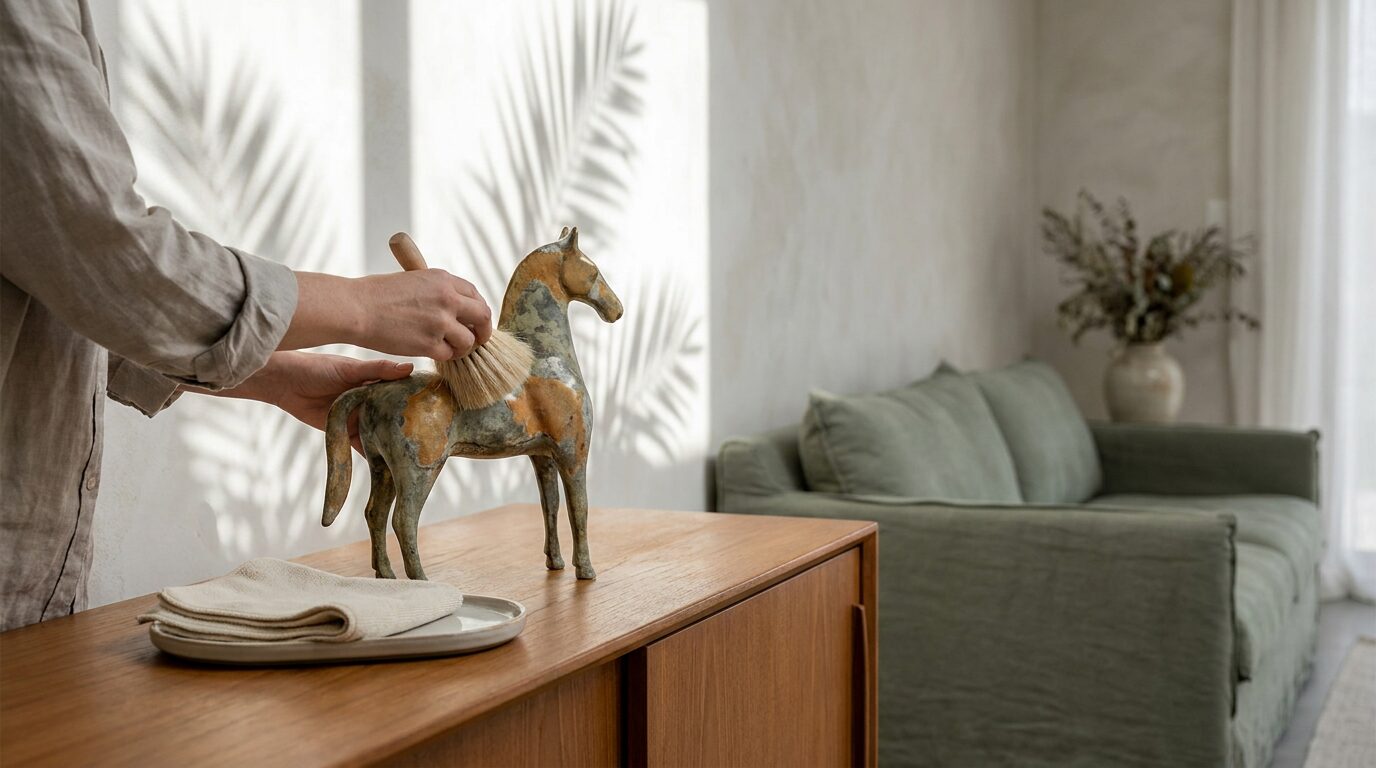
- Use a clean, dry microfibre cloth or a soft natural-bristle brush.
- Work gently from top to bottom, following the shape of the sculpture.
- Use the brush for details, crevices and textured areas where dust collects.
- Handle the piece by its base, and avoid touching the patina with bare hands more than necessary.
For most indoor sculptures, that is genuinely all the cleaning they need.
When it needs a little more
If you notice fingerprints or a sticky film, wipe the area with a soft cloth that is only barely damp with clean water, then dry it straight away with a second cloth. Test on a small, hidden spot first. Avoid soaking the sculpture or leaving water in crevices.
Protect it with wax
A very thin layer of soft paste wax helps protect the surface from humidity and fingerprints:
- Choose a wax without silicone; the solvents in some waxes can alter delicate patinas.
- Apply sparingly with a soft cloth, let it dry, then buff gently.
- Renew it roughly every one to two years, or more often in a humid climate.
What to avoid
- Metal and brass polish on patinated surfaces: it is designed for bare brass and strips the colour.
- Vinegar, lemon, ketchup and other acidic “hacks”: they remove tarnish and patina alike.
- Abrasive pads, steel wool and scouring powders, which scratch the surface.
- Harsh solvents and silicone-based waxes.
- Dishwashers and soaking in water.

Living with brass in a humid climate
Humidity speeds up the natural darkening of brass. In tropical or coastal homes, keep sculptures away from open windows, bathrooms and direct spray, dust them a little more often, and keep the wax layer fresh. A slow, even change in tone over the years is part of brass’s character, its patine.
When to call a professional
For dents, breaks, flaking colour or corrosion that dusting cannot fix, do not experiment: a conservator or professional restorer can treat the surface without damaging it.
Explore the full range of hand-finished pieces in our Cakra Collection of brass sculptures, or contact us with any care question about a piece you bought from us.
Frequently asked questions
Can I clean a brass statue with vinegar or ketchup?
Not if it has a patina. Acidic cleaners such as vinegar, lemon or ketchup remove tarnish and coloured patina alike, so the original finish would be lost.
How often should I clean a brass sculpture?
Dust it about once a week with a dry microfibre cloth or soft brush. A thin coat of silicone-free wax every one to two years, or more often in humid climates, helps protect it.
Should I polish my brass sculpture?
Only if it is bare, uncoated brass and you want it bright. Never polish a patinated or coloured finish, because metal polish removes the patina permanently.
Why is my brass sculpture changing colour?
Brass naturally darkens slowly as it reacts with air and humidity. On a patinated piece, a gradual, even change is normal; sudden spots or flaking are a reason to ask a restorer.
Sources and further reading
- Care of bronzes, Sladmore Gallery.
- Bronze statue care and cleaning guide, Lotus Sculpture.
- Sculpture maintenance, Anthony Smith.