A Buddha statue is a reminder of calm, kindness and inner focus. Its exact meaning comes from the details: the pose, the position of the hands, the eyes and the shape of the head. In the home, it is best placed somewhere raised, clean and quiet, where it can be seen and respected rather than used as casual decoration.
What does a Buddha statue symbolise?
A Buddha statue represents the Buddha’s teaching and the qualities it points to: peace of mind, compassion and awareness. For many people, Buddhist or not, a statue at home is simply a daily invitation to slow down and breathe. Different poses carry slightly different messages, so it helps to know what you are looking at.
Common poses and what they mean
- Sitting in meditation: the most familiar pose. When the hands rest together in the lap, a gesture known as the dhyana mudra, the statue expresses meditation and calm focus. Our Buddha Duduk Meditasi (“sitting in meditation”) shows this pose.
- Touching the earth: one hand reaching down to touch the ground, the bhumisparsha mudra, recalls the moment of awakening and steadfast resolve.
- Standing: a standing Buddha feels upright and present, a calm figure for an entrance or a corner. See the Patung Buddha Berdiri (“standing Buddha statue”).
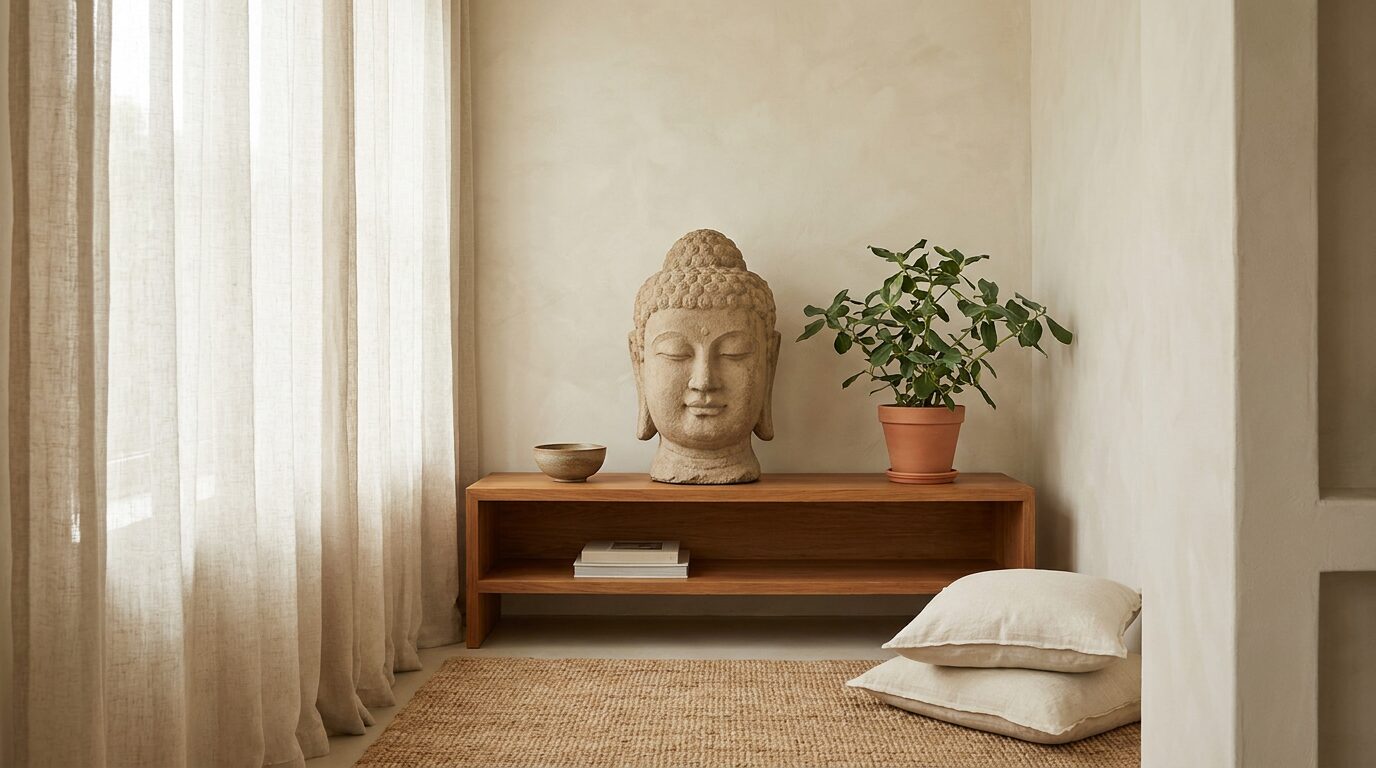
- The Buddha head: head-only sculptures focus all attention on the serene face, which makes them popular in modern interiors.
Exact gestures and their names vary between traditions and periods, so read each statue as a whole: pose, hands and expression together.

What the details mean
Closed or lowered eyes
In Buddhist art, eyes that are closed or half-closed are usually read as a sign of meditation and inward attention, which is why so many statues look peacefully absorbed. Our Kepala Buddha Merem takes its name from this: merem means “eyes closed”.
The topknot on the head
The rounded protuberance on top of the Buddha’s head is called the ushnisha. Traditionally it is one of the 32 marks of a Buddha and symbolises his enlightenment and wisdom. In art it is often shown as a knot of hair, as on our Buddha Kuncir (kuncir means “topknot”).
Crowns and ornaments
Some contemporary pieces reinterpret the head with a stylised crown, like the pointed crown of the Kepala Buddha Lancip or the three tiers of the Kepala Buddha Tingkat 3, both in brass. These are artistic interpretations that draw the eye upward.
Where to place a Buddha statue at home
Customs differ between Thai, Japanese, Tibetan and other traditions, but most guidance agrees on a few simple principles:
- Raise it. Place the statue on a console, shelf or stand rather than directly on the floor.
- Choose a calm room. A living room, reading corner, meditation space or entrance works well.
- Keep the area clean and uncluttered. Avoid surrounding it with unrelated objects, bottles or busy decorations.
- Let it face the room. A statue that looks out over the space feels welcoming and balanced.
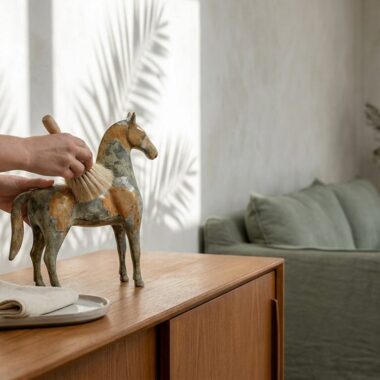
- Treat it with care. Dust it gently and handle it by the base rather than the face or hands.
If you follow a particular tradition, its own customs come first. If you are unsure, respect is the guiding rule: tout simplement.

Choosing the right material and size
- Brass is heavy, lasting and develops a warm character over time. It suits a statement piece, such as our 60 cm Thailand Buddha Couple or the small, limited-edition Small Buddha.
- Lightweight fibre is easy to move and comes in calm colours, from white sand to turquoise, ideal for changing displays or larger sizes.
- Size: 20–35 cm suits a shelf or bedside table; 40–60 cm becomes the focal point of a room.
Browse all pieces in Buddha Statues.
Is a Laughing Buddha the same as a Buddha statue?
No. The cheerful, round-bellied “Laughing Buddha” is Budai, a figure from Chinese folklore associated with happiness and abundance. He is a different figure from the historical Buddha shown in meditation statues.
Frequently asked questions
What does a Buddha statue symbolise?
A Buddha statue symbolises the Buddha’s teaching and qualities such as calm, compassion and awareness. The exact meaning depends on the pose, the hand gesture and the expression.
Where should I put a Buddha statue in my home?
Place it on a raised surface, such as a console or shelf, in a calm and uncluttered room like a living room, reading corner or meditation space, rather than directly on the floor.
Can non-Buddhists have a Buddha statue at home?
Many people who are not Buddhist keep a Buddha statue as a reminder of calm. What matters most is treating it with respect: a clean, raised place and no use as a casual prop.
What does the bump on top of the Buddha’s head mean?
It is called the ushnisha. Traditionally it is one of the 32 marks of a Buddha and symbolises enlightenment and wisdom; in art it is often shown as a topknot of hair.